
Complete guide to border control procedures, immigration requirements, and what to present when arriving in Morocco with your approved electronic visa.
Essential information for a smooth entry process
Once your Morocco e-Visa has been approved and you've received it via email, you're ready to travel. However, understanding what happens at the border and what documents you need to present is crucial for a smooth entry into Morocco. This guide provides comprehensive information about the entry procedures, immigration requirements, and what to expect when you arrive at Moroccan ports of entry.
The Morocco e-Visa is an electronic travel authorization that must be presented upon arrival along with other required documents. Immigration officers will verify your visa status, check your passport validity, and ensure you meet all entry requirements before granting you access to Morocco.
Proper preparation and understanding of the entry process will help you avoid delays and ensure a pleasant start to your visit to Morocco in 2026.
When entering Morocco with an e-Visa, you must present the following documents to immigration officers:
Important: Travel insurance is recommended but not mandatory. However, having comprehensive travel insurance can be beneficial in case of medical emergencies or unexpected situations during your stay.

What to expect when you arrive at Moroccan airports or ports
Upon landing at a Moroccan airport or arriving at a port of entry, follow the signs to the immigration and passport control area. There are typically separate queues for Moroccan nationals and foreign visitors. Join the queue designated for foreign passport holders or e-Visa holders if available.
When you reach the immigration counter, present your passport and approved e-Visa to the immigration officer. The officer will verify your documents and may ask you questions about your visit, including:
Immigration officers may conduct biometric verification, which can include fingerprint scanning and facial recognition. This is a standard security procedure to confirm your identity matches the information in your e-Visa application.
Once your documents are verified and approved, the immigration officer will stamp your passport with an entry stamp. This stamp indicates the date of your arrival and is important for tracking your permitted stay duration. The Morocco e-Visa typically allows a maximum stay of 30 days from the date of entry.
After clearing immigration, proceed to the baggage claim area to collect your luggage. You will then pass through customs, where you may need to declare certain items. Morocco has specific regulations regarding the import of goods, currency, and prohibited items.
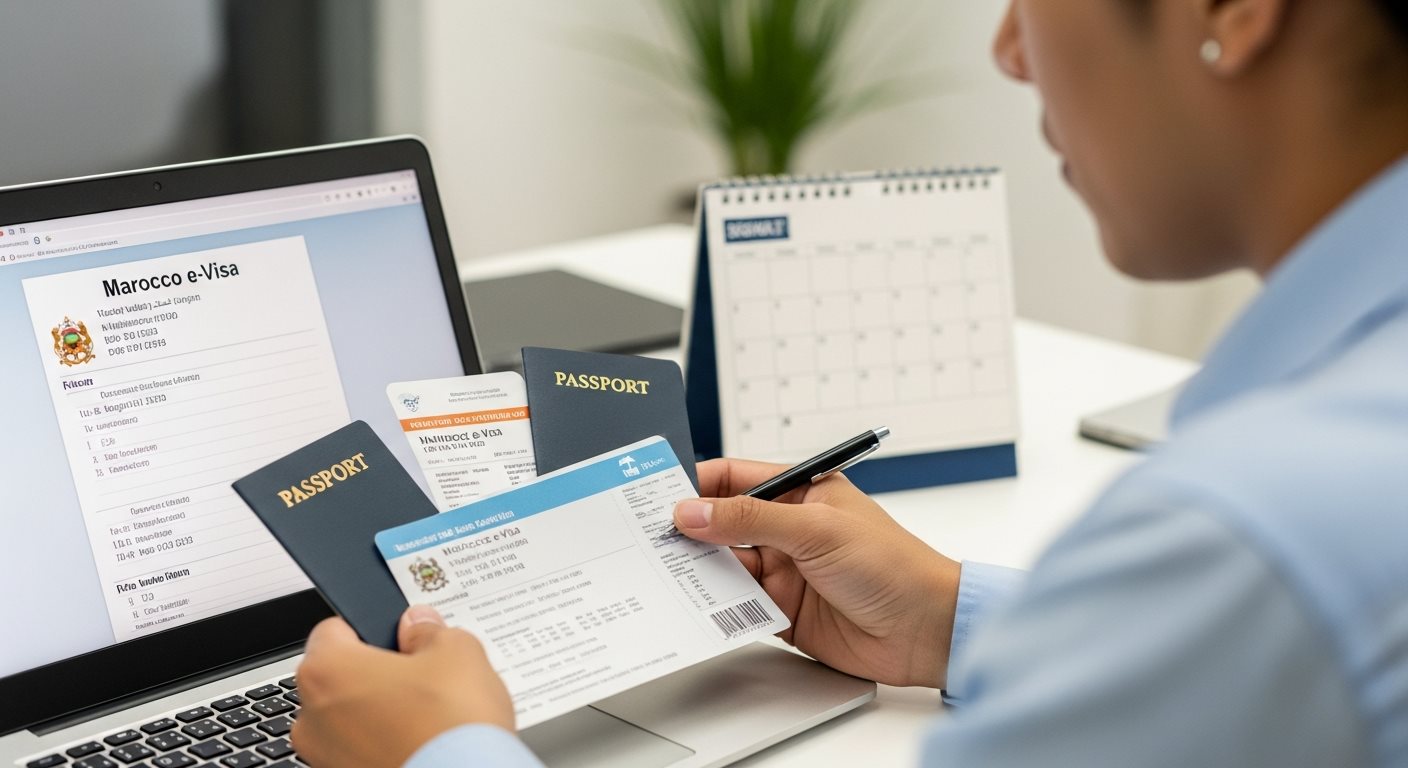
The Morocco e-Visa has specific validity periods and entry rules that you must understand before traveling:
The Morocco e-Visa is valid for 180 days from the date of issue. This means you must enter Morocco within this 180-day window. If you don't travel within this period, your e-Visa will expire and you'll need to apply for a new one.
Once you enter Morocco, you are permitted to stay for a maximum of 30 days. This duration begins from your date of entry as stamped in your passport by immigration officers. Learn more about e-Visa validity and stay periods.
The Morocco e-Visa is typically issued as a single-entry visa. This means once you exit Morocco, your e-Visa becomes invalid, even if you haven't used the full 30-day stay period. If you plan to re-enter Morocco, you will need to apply for a new e-Visa.
In some circumstances, it may be possible to extend your stay in Morocco by visiting the local immigration office or police station before your visa expires. However, extensions are not guaranteed and are granted at the discretion of Moroccan authorities.
Morocco offers a rich tapestry of culture, history, and natural beauty. From the bustling medinas of Marrakech and Fez to the stunning Atlas Mountains and Sahara Desert, your journey begins the moment you step through immigration.
Ensure all your documents are in order for a smooth entry and an unforgettable Moroccan experience.
Preventing problems at Moroccan border control
One of the most common reasons for entry denial is insufficient passport validity. Your passport must be valid for at least 6 months from your date of arrival in Morocco. Check your passport expiration date well before your travel date and renew it if necessary. For more information, see our guide on passport requirements.
Always carry both a printed copy and a digital copy of your approved e-Visa. Some travelers have experienced issues when relying solely on digital copies due to technical problems or lack of internet access at the airport. If there's an error in your e-Visa information, learn how to correct application mistakes before traveling.
Immigration officers may ask for proof that you have sufficient funds to support yourself during your stay in Morocco. The requirement is typically €70 per day. Acceptable proof includes recent bank statements, credit cards with available credit, or cash. Carry these documents in an easily accessible location.
You must demonstrate that you intend to leave Morocco within the permitted stay period. A confirmed return flight ticket or onward travel booking is essential. Immigration officers may deny entry if you cannot provide proof of your departure plans.
If you used a residence permit or multiple-entry visa from another country during your e-Visa application, you must carry the original document when entering Morocco. The document must still be valid and match the information provided in your application. Failure to present this document can result in entry denial.
If you have previously overstayed a visa in Morocco or violated immigration rules, you may face difficulties entering the country again. Be honest with immigration officers and be prepared to explain any past issues.
Follow these recommendations to ensure hassle-free entry into Morocco:

Where you can enter Morocco with your electronic visa
Morocco has several international airports where e-Visa holders can enter the country. The main airports include:
E-Visa holders can also enter Morocco through designated seaports, particularly those with ferry connections from Spain and other Mediterranean countries. Major seaports include Tangier Med Port and Casablanca Port.
While Morocco has land borders with Algeria and the disputed Western Sahara territory, entry requirements and procedures may vary. It's essential to verify current entry regulations for land border crossings before planning your trip.
Once you've successfully cleared immigration and customs, here are important steps to take:
The entry stamp in your passport is crucial for tracking your permitted stay duration. Keep your passport in a safe place throughout your visit and check the stamp to confirm your allowed stay period.
Consider registering with your country's embassy or consulate in Morocco. This can be helpful in case of emergencies, lost passports, or other situations requiring consular assistance.
Familiarize yourself with Moroccan laws and customs. Morocco is a Muslim-majority country with specific cultural norms and legal requirements that visitors should respect.
Keep track of your stay duration to avoid overstaying your visa. Overstaying can result in fines, deportation, or difficulties with future visa applications. If you need to stay longer, contact local immigration authorities before your visa expires.
Carry copies of your passport, e-Visa, and entry stamp with you at all times. Keep originals in a secure location at your accommodation. Having copies can be helpful if you need to show identification or in case of document loss.
Common questions about entering Morocco with an e-Visa
While some immigration officers may accept a digital copy displayed on your phone, it is highly recommended to print your e-Visa. Technical issues, battery problems, or lack of internet access can prevent you from accessing digital copies. Always carry at least one printed copy of your approved e-Visa to avoid any complications at the border.
If there are discrepancies between your e-Visa and passport information, immigration officers may deny you entry. Common mismatches include spelling errors in names, incorrect passport numbers, or wrong dates of birth. If you notice any errors in your e-Visa before traveling, contact support immediately to correct the information. Do not attempt to travel with mismatched documents.
No, you cannot enter Morocco before the validity period of your e-Visa begins. The e-Visa is valid for 180 days from the date of issue, and you can enter Morocco at any time within this 180-day window. However, you cannot enter before the issue date. Plan your travel dates accordingly when applying for your e-Visa.
The standard requirement is €70 per day for the duration of your intended stay in Morocco. For example, if you plan to stay for 15 days, you should be able to demonstrate access to at least €1,050. This can be shown through bank statements, credit cards with available credit, traveler's checks, or cash. Immigration officers may ask to see this proof, so have it readily available.
If you lose your passport while in Morocco, immediately report the loss to the local police and obtain a police report. Then contact your country's embassy or consulate in Morocco to apply for an emergency travel document or replacement passport. You will also need to visit the local immigration office to explain the situation and obtain necessary documentation for your departure from Morocco.
Yes, every traveler including minors and children must have their own Morocco e-Visa. Each child needs a separate e-Visa application and must present their own passport and approved e-Visa at the border. If a child is traveling with only one parent or with guardians, additional documentation such as parental consent letters may be required.
Helpful guides and information for your Morocco visit
Entering Morocco with an e-Visa is a straightforward process when you have all required documents prepared. Understanding the entry procedures and requirements helps ensure a smooth arrival and allows you to begin enjoying your Moroccan adventure without delays.
For more information about the Morocco e-Visa system, explore these helpful resources:
Need assistance with your e-Visa application? Visit our contact page or check the application status tracker.